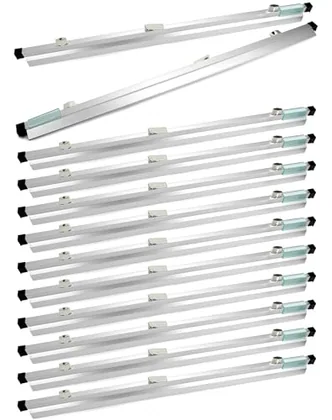
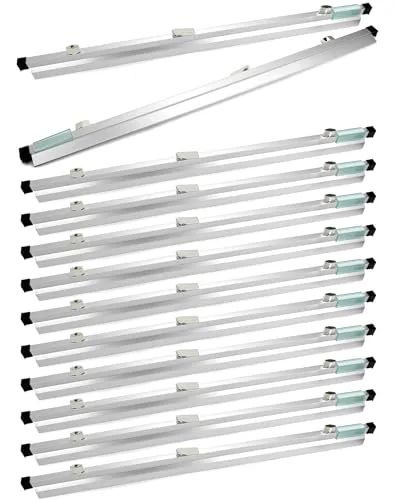
30 Inch Blueprint Clamps
3.7(20)pack of 1230 inaluminium
$138.9712 in the pack

QWORK
| What we publish | In this department |
|---|---|
| Parts here | 36 |
| Prices | $6.97 to $138.97 |
| Sold as a shop pack | 30 |
| Stating a material | 31 |
| Stating a load or pressure | 6 |
| Stating full dimensions | 3 |
Clamps sit between your material and the work you want to do with it. Pick the wrong one, and the piece shifts halfway through a cut. Pick one that's too heavy, and you're tired before lunch. We have thirty-six parts in this department, and most of them solve a specific problem rather than trying to cover every situation at once.
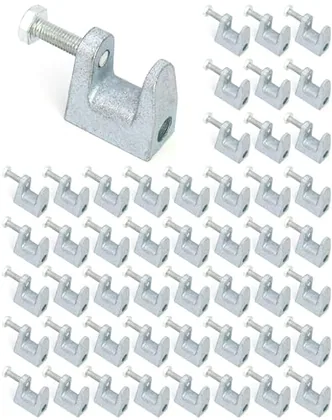
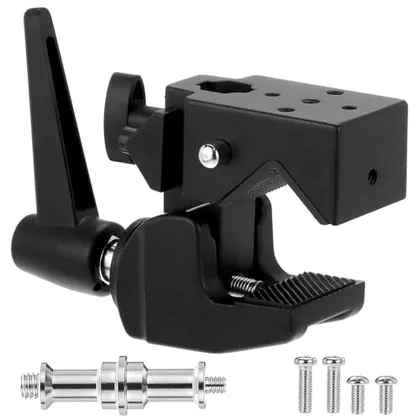
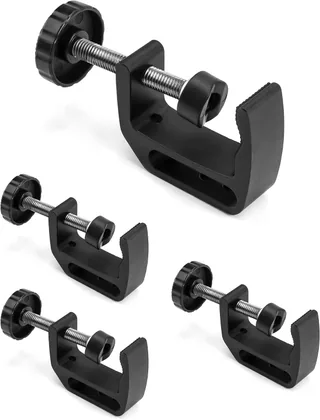
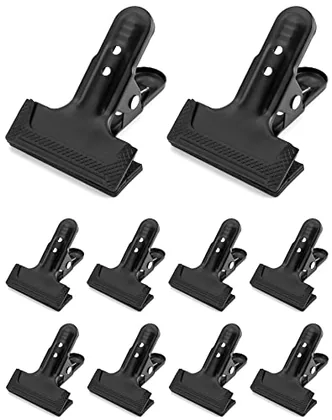
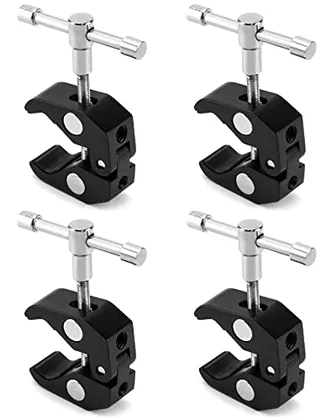
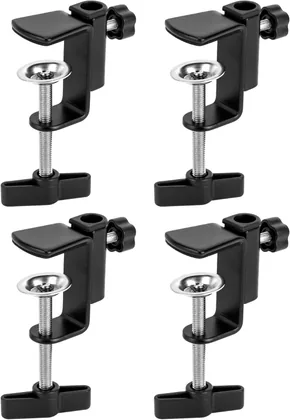
C-clamps are the ones most people reach for first, and we carry them for desk mounting as well as handheld use. Check the thread size on the mounting hole if you are building a fixture. Not all desks accept the same bolt. Spring clamps work better when you need speed and you do not need crushing force. Our ten-pack of medium steel springs covers most shop tasks without the weight of cast iron.
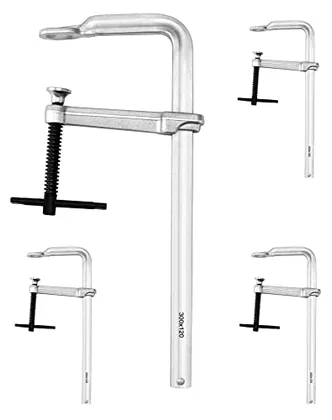
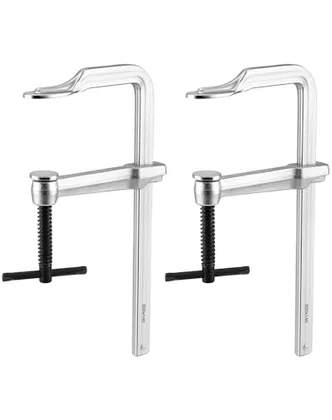
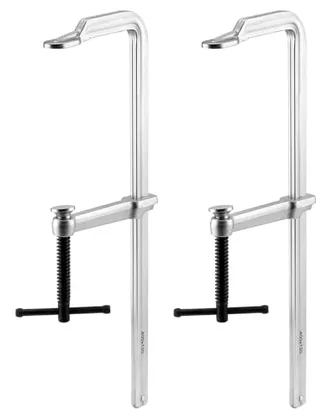
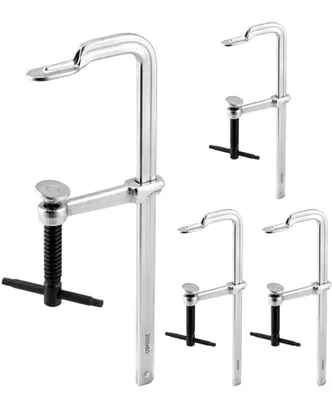
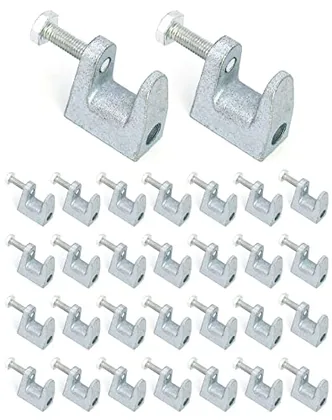
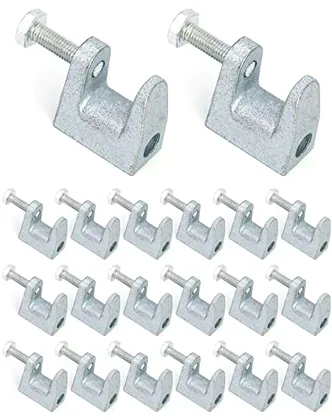
F-clamps and beam clamps handle wider spans. An F-clamp spreads pressure across the bar instead of concentrating it at a single point, which matters when you are gluing panels or holding sheet metal flat. The twelve-inch heavy-duty model in this range will bridge gaps that would swallow a standard C-clamp whole. Beam clamps give you that same reach with less bulk hanging over the bench.
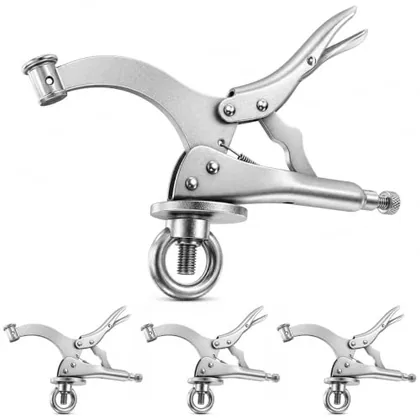
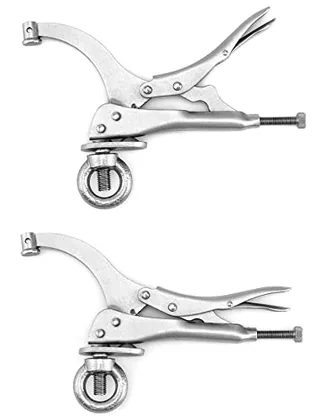
The drill press clamp is its own category. It locks down so the bit does not walk the workpiece across the table when it breaks through. If you run a press regularly, this is the part you notice only when it is missing.
Before you order, measure two things: the depth of what you are clamping and the space around it. Throat depth determines whether the clamp can actually reach your work once the jaws open. Jaw width tells you how much surface contact you get. Neither number appears in the product name on most of these parts, but both of them decide whether the clamp fits your setup or sits in a drawer.
We source each line from manufacturers who build to print, and we check the specs against what arrives. A clamp that cannot hold its rated load goes back. We would rather stock fewer parts that work than fill shelves with tools that look right but let go under pressure.